The “Boy’s Love” (BL) “yaoi” genre often sparks intense debate, frequently being dismissed by some as merely fetishized content created by and for cisgender heterosexual women. This perspective by Kiyo Mizuki demand more nuance and examines the complex historical and cultural contexts that shape this media.
From its roots in Japanese doujinshi to its role as a tool for exploring gender, identity, and societal subversion, BL and Yaoi offer much more than surface-level tropes. This article explores the nuances of the genres, examining why they resonate with diverse audiences—including lesbians, trans men, and nonbinary individuals—and how these narratives often function as powerful, if sometimes controversial, spaces for navigating identity and escaping heteronormative expectations.
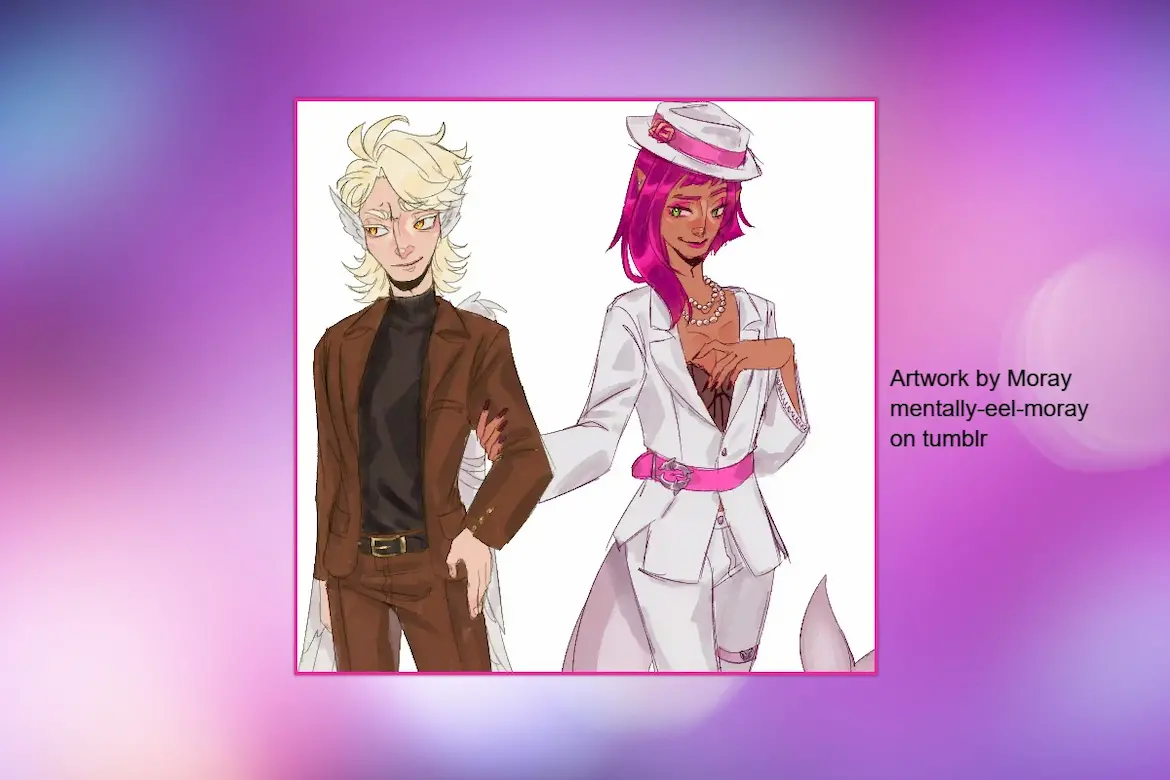
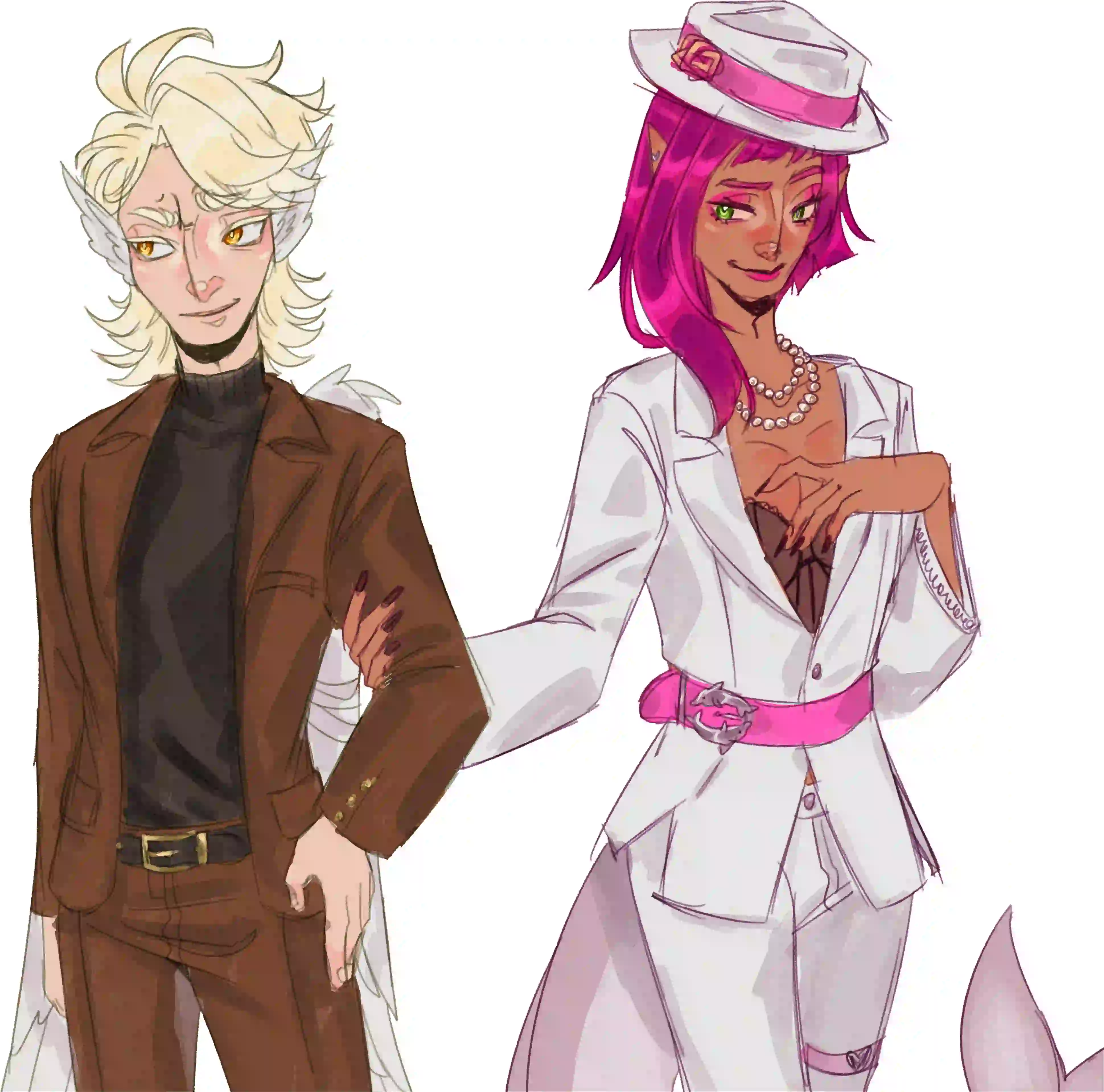
Artwork courtesy of the artist Moray (mentally-eel-moray on Tumblr)
In This LitStack Review of BL and Yaoi
The Intersection of Queer Identity and the Genre of “Boy’s Love” (BL)
Subverting Existing Tropes
For those unfamiliar with fandom spaces, specifically anime, manga, and their related sub-genres, the terms “yaoi” and “BL” typically refer to erotica or romance genre media featuring queer or same-sex relations. There is an ongoing debate among internet and fandom denizens about the existence of this media. Some accuse it of being homophobic and fetishized content produced and consumed by mainly cisgender heterosexual women. This accusation is not entirely true, and this article seeks to explain some history behind the consumption of BL/Yaoi by both cisgender heterosexual (cishet) women, as well as lesbians, transmen, and nonbinary people. While some BL/Yaoi is more or less masturbation material, some of it seeks to subvert existing tropes and genres, and because of this, in a case-by-case argument, BL needs to be treated with nuance.
What is BL/Yaoi?
First off, what is BL/Yaoi, and why is it an issue for some people? What makes people like it? What even is it? Let’s unpack all that. Yaoi is actually an acronym of sorts whose full title is taken from a Japanese phrase: “yama nashi, ochi nashi, imi nashi,” which translates to “no climax, no point, no meaning.” It was coined by a doujinshi (self-published manga/comic) group and was intended for a specialized audience (AKA fans of the genre and other BL writers). Works ascribed with the title of “yaoi” or “BL” depict male-male homoerotic relationships and draw on original or existing characters from published media. And don’t get me wrong, a lot of this content has graphic sex scenes that vary from “standard” gay sex to scenes involving unusual accoutrements and situations, which I feel explaining in greater detail would violate the terms and conditions of this project.
Search at your own risk if you want.
No Doubt About It, Men Kiss
A staple of Yaoi and BL manga, novels, and online media are depictions of men kissing, no doubt about that. Still, some people struggle to label BL/Yaoi as queer, as a majority of it, especially in Asia, is created by cishet women. In contrast, some BL contain lines in which the male characters explicitly state they are not homosexual. Still, I would argue that some, though not all of the content, is queer and subversive, while some is genuinely just graphic pornography-without-plot (PWP)—which is also fine—not everything in life has to have some special grand meaning.
Regardless, the question remains of who produces this content and for whom. Why do women like to depict male-male relationships? What do women and non-male-identifying individuals gain from depicting these relationships? Is it fetishization? Is it wrong? Is it right? And what makes it queer and subversive in some contexts?
Escaping Societal Expectations
As has been indicated by polls and posts in online fandom spaces like tumblr, some women write male-male relationships to escape the societal expectations and roles forced upon heteronormative couples, both in real life and as depictions in media. Transgender and otherwise non-male people, too, may operate from similar motives as they explore ideas about gender, anatomy, and sexuality that are viewed negatively in mainstream society. Some aspects of male-male content can subvert societal implications and standards, and these can result in depictions of relationships with “equal” footing, showing sexuality in ways that are considered “inappropriate” in other genres, and allowing someone to take control of something in fiction that in real life they may have little control over due to biological sex, trauma history, or other factors.
In BL/Yaoi, gender (and androgyny) and social differences are portrayed in a way that heteronormative relationships often suppress in their respective media. An example of this is Thomas by Moto Hagio (1995), which depicts male characters in androgynous ways. This allows female readers to see themselves depicted in the series despite the focal characters being male. Anime and manga do this often with androgynous characters, feminine men, masculine women, etc. Some non-BL examples of this are Haruka Tenou from the popular anime/manga Sailor Moon or Haruhi Fujioka from Ouran High School Host Club.
Another example of subverting gender roles/identity is the depiction of male characters who can become pregnant and live in a world with lesser rights akin to those that women deal with in real life (this is called “mpreg” for male pregnancy). Mpreg is part of a larger genre known as A/B/O, an acronym for Alpha/Beta/Omega. A/B/O is a type of alternate reality where humans have wolf sex biology and heat cycles, and in this offshoot of BL (which is starting to be used on non-male characters as well) is sometimes used to create complex societies and world-building… and sometimes it’s just porn. Flip a coin.
Against Policing Media, But It’s Not That Simple
Returning to the question of why some women write male-male relationships. In order to further unpack the reasons, you have to understand the social scapes in different geographic regions surrounding this genre of content/depictions. In the West, depictions of gay couples are more common in certain mainstream media, even though they are often censored or non-focal points. But remember, BL/Yaoi comes from Asia (focusing on Japan and China), and Asian views are a bit different. In Japan, BL/Yaoi is a genre of media that is produced and marketed to young women by the anime industry. It is a known trope and often used as the butt of jokes in some anime and manga (and could be considered homophobic depending on who you ask). The BL/Yaoi manga publishing industry is more widespread than you might imagine.
However, in China and culturally similar places, such as Hong Kong and Taiwan, for example, homosexuality is considered wrong, and publishing homoerotic works can get you into legal trouble. Sites are often asked to take down such depictions of characters, and creating danmei (the Chinese term for stories focusing on romance between two male characters) can be an act of political and anti-censorship protest by writers of either gender.
Yet, as I said, not all BL and Yaoi can be analyzed this way. While an example such as A/B/O Military Academy Cadets analyzes the legal and social structure of a fictional society in which people/men’s bodies are policed and moderated by the government, determining social status and occupation, other relatively recent examples of BL media are not as opinionated. For example, Nitro+’s Sweet Pool is a visual novel in which a teenage student gets a parasitic menstrual cycle and, in one ending, is cannibalized by his friend. This makes less clear statements and functions as sexual entertainment for its player more than it makes any kind of greater social statement.
Many of these male-male love stories have more sociopolitical depth than is assumed at first glance because of the sex. Given the right lens, any media can be used to make an argument, and while the implications of some BL/Yaoi leave little to be assessed and elaborated upon, many can be seen making grander statements about the roles that sexuality and gender expectations play in society. These stories should be viewed with nuance on an individual level, not as a conglomerate.
~Kiyo Mizuki
Get A Grip on BL and Yaoi
Here are some valuable links that will expand your understanding and enlighten you on our subject material.
We’ve spotted a few book titles related to BL/Yaoi that you’ll definitely want to add to your TBR stack, including My Fluffy Moody Crush by Nayuta Nago, Glass Syndrome by Eiko Ariki, and That Time I Got Stuck to the Guy I Hate by Tarona.
Kiyo Mizuki is a writer of nonfiction, fanfiction, and a YA novel in progress. They are a digital
artist who is inspired by Japanese anime and manga as well as Korean manhwa and a reader of manga, YA, classic literature, and graphic novels. They are a fourth-year student at the
University of California, Santa Cruz, majoring in Creative Technologies, a new major, and the
first of its kind in the UC system. Find Kiyo on Tumblr at: https://kiyo-cant-write.tumblr.com/
Be sure and check out LitStack Spotlights that shine a light on books we think you should read. We feature two books each week in our LitStack Spotlight, and offer suggestions for similar titles in our LitStack Spots.
Each week we offer a LitStack Rec, sometimes two books at once, sometimes more. Be sure and look at our LitStack Recs where you’ll find what you should read next.
You can find and buy the books we recommend at the LitStack Bookshop on our list of LitStack Recs.
As an affiliate of Bookshop.org, Malaprop’s, Books-A-Million, Audiobooks.com, Chirp, 2nd & Charles, Amazon, NameHero, Envato, and Place-It, LitStack may earn a commission—at no cost to you—when you purchase through our affiliate links. We appreciate the brands we work with, and also appreciate that using our affiliate links may help you find your next great read, a book or two or more, in whatever form, while simultaneously supporting LitStack. When you use our affiliate links, you help keep LitStack running—and for that, we thank you.
As a Bookshop, Malaprop’s, BAM, Barnes & Noble, Audiobooks.com, Amazon, and Envato affiliate, LitStack may earn a commission at no cost to you when you purchase products through our affiliate links.