Lewis Buzbee calls us out with Books I Was Once To Cool To Read. Maybe there was a time when you thought you were too cool to read certain books, but now you cherish those stories you once considered beneath your hip facade.
It turns out, embracing the classics and the so-called uncool reads is the ultimate secret to unlocking a richer literary experience. Books are timeless. Only people can change. Enjoy Lewis Buzbee’s piece; we’re so happy to share it.
You can find and buy the books we recommend at the LitStack Bookshop on our list of LitStack Recs.
In this LitStack Review, Books I Was Once Too Cool To Read
Books I Was Once Too Cool to Read
by Lewis Buzbee
No One Reads Bestsellers!
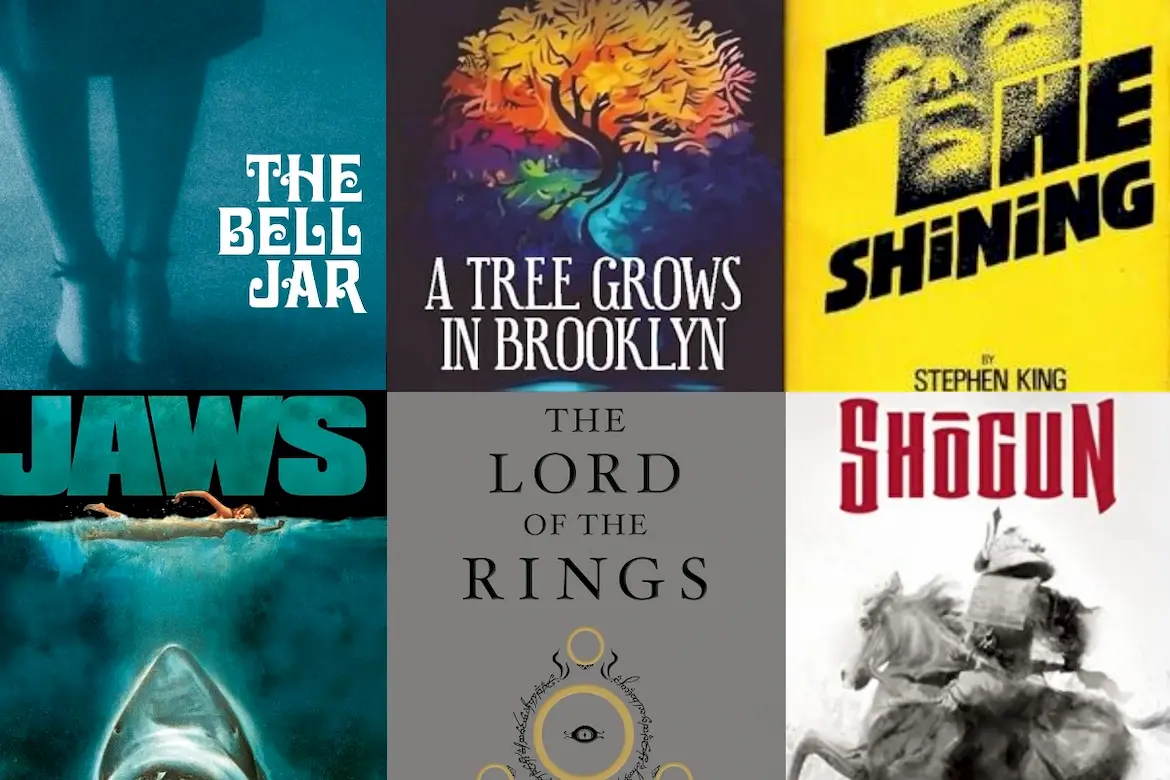
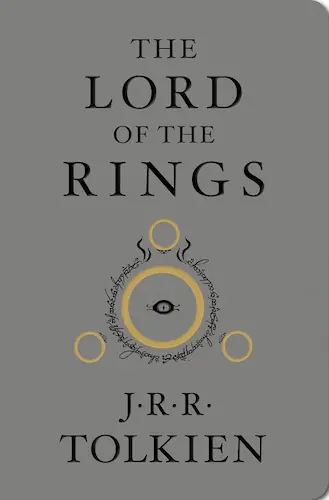
One feature table that Christmas season was a Mount Doom of Tolkien, a dragon’s treasure hoard of books and merchandise. The mass market paperbacks of each volume of The Lord of the Rings, including The Hobbit, accompanied, of course, by the box set of the four together. Newly re-issued hardcovers of each, and that box set too. A deluxe box set of green, faux-leather hardcovers, which slip case was bejeweled with paste rubies and emeralds. But wait. Calendars! The lushly illustrated wall calendar, the spiral-bound weekly planner, the Tolkien Quote-a-Day calendar. Sidelines: The Magic of…The Art of…The Encyclopedia of…
This bounty was prompted by that fall’s biggest book, The Silmarillion, a collection of myths and legends of Tolkien’s universe, edited posthumously by Tolkien’s son Christopher. It had been years since a new Tolkien; we could barely keep the displayed stocked.
There was no way I was going to read any Tolkien.
I was 20 in 1977 and had been working at Upstart Crow and Co. Books in San Jose, California, for a year and a half. I had started reading “serious” literature when I was 15 and was committed to that path: Steinbeck, Didion, Carver, O’Connor. And being 20, of course, I arrogantly knew which books were worthy, and which books were not quite up to snuff. Alas. My resistance had something to do with Tolkien’s popularity; I’d unboxed and shelved and re-shelved so many Lord of the Rings titles to even consider reading one. Over the years, I’ve spoken with many booksellers about this catch: No one reads best-sellers.
The staff at Crow called the new volume The Silly Marion. Snark was our prevailing weather.
For over 40 years I did not read Tolkien. I did, however, read Ursula K. Le Guin’s essays on Tolkien, and understood, I thought, Tolkien’s literary achievements, and could not deny his importance to readers. Then, a few years ago, my wife and I were staying in a friend’s cottage, when I found I’d sped through the novel I’d brought with me (I only brought one? Madness). There, on the cottage’s built-in bookshelves, I spied, among the paperbacks left by previous guests, The Fellowship of the Ring. Why not.
Oh, my, where had I been? Le Guin was right about Tolkien’s “thunderous” prose; I was completely entranced by this universe and its characters, astonished that his magical realm was at once so strange and yet familiar. I read as much as I could that weekend but wasn’t able to finish; before we set out for home, I called my local and had them hold a copy for me. We stopped by the bookshop before pulling into our driveway.
Shakespearean and Un-Put-Down-Able
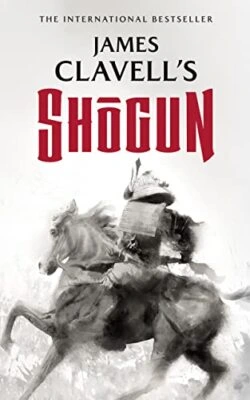
I did not set out intentionally to read those too popular books I’d sniffed at when I was a callow bookseller; after my Tolkien read, they just kept popping up. When the new Shogun streaming series began in 2024, my friend Steve, veterate reader, told me he’d just finished the novel and that it was amazing (neither he nor I watched the show). My defenses rose up; if there was one book I’d shelved too many copies of back in the day—that tidal wave prompted by the first “mini-series” in 1980–it was James Clavell’s Shogun. Box after box, armload after armload, that white and red paperback haunted me. Again: too popular. But I trusted Steve, so bought a lovely two-volume trade paperback tie-in.
Again, complete immersion. Shogun is a historical novel of profound storytelling, its world as real and complete as Tolkien’s Middle Earth. I had expected it to be, well, creaky, and possibly a little bit racist. But the great device of Shogun is that its main character, the lens of the novel, is a European; we see 16th century feudal Japan through a stranger’s eyes, revealed by Clavell’s careful and artful research. The novel is Shakespearean in both its political complexities and in the complex nature of its characters. As was once said of a 1980s Sidney Sheldon novel: “un-put-down-able”.
We not only judge books by their covers but by their feel
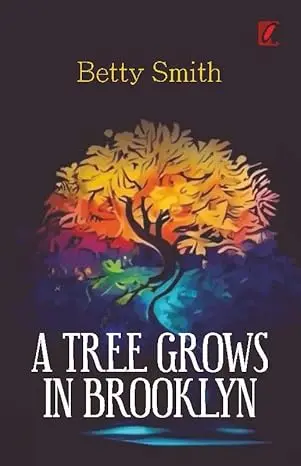
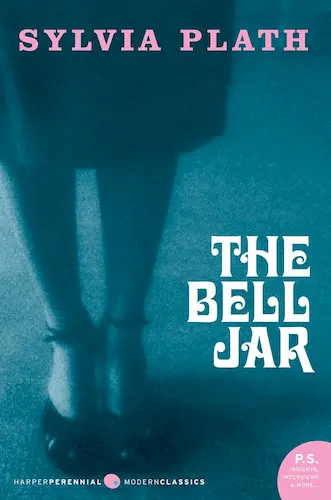
The following summer, another friend asked me what books I had not read that I might still want to. I immediately considered two novels I’d overlooked for years: A Tree Grows in Brooklyn by Betty Smith and The Bell Jar by Sylvia Plath. Neither of these novels were blockbusters in the vein of Tolkien or Clavell during my early bookselling days, but they were novels that were always on hand, and people were always telling me to read them.
I was put off by A Tree Grows in Brooklyn because of the covers it wore—several different covers over the years, in mass market and trade editions. The covers were, well, too frilly—but always with a tree! The blurbs and jacket copy were focused on the sentimentality of this coming-of-age story. But when I put my hand to the new trade paper, and felt the book’s heft, brick-ish, smoothed the soft un-coated cover, and riffled the deckled edges, something shifted (we not only judge books by their covers but by their feel).
A Tree Grows in Brooklyn begins in 1912 and follows Francie Nolan from 11 to 16 in her down-at-heels Brooklyn neighborhood. While Francie is charming, spirited, the novel never evades the realities of this place and time: poverty, alcoholism, bigotry, death. It is a true coming-of-age story; the character, as in all the best novels, journeys from innocence to experience. At the end of the book, Francie manages to drag herself out of her small world and into the larger one. It is an American classic that belongs on the same shelf with Steinbeck’s The Grapes of Wrath and Ann Petry’s The Street. I should have read it long before.
Appallingly Radical
Although I had early on read and loved Sylvia Plath’s poetry, I shied away from The Bell Jar, for rather vague reasons. I suspect, with some chagrin, that I was not interested in a “college girl” novel. Shame on me. Because I knew that not only had readers enjoyed and admired the book, it was also an “important” book in many readers’ lives. These appreciations alone should have led me to it.
I was appalled when I finally read it. Please, don’t get me wrong, I mean appalled in the best way. The Bell Jar is a radical novel, and I understand why it was first published, in 1963, under a pseudonym and only in the U.K. Never before, it seemed to me, had anyone written so clearly and candidly about mental illness: isolation, depression, suicidal ideation. The Bell Jar is also a cry against misogyny, a misogyny both brutal and casual, a topic rarely detailed until then. U.S. publishers had considered it too squeamish-making. Happily, the truth did emerge; The Bell Jar was published in the U.S. in 1971, years after Plath’s death and has remained in print since.
Big Shark, Small Town
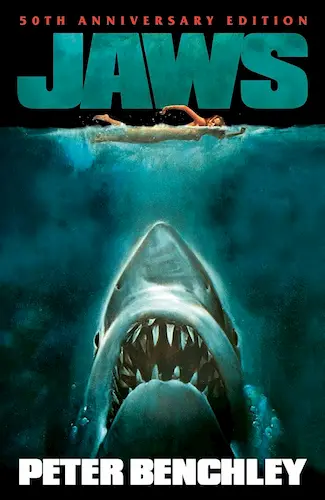
This last fall, I went, somewhat desperately, to my local shop, Green Apple Books on the Park in San Francisco. I just couldn’t find the right book; that week, I had tried two different novels, but nothing clicked. While exchanging the most recent disappointing book, I whined a little. A bright young bookseller, Nick LoBue, asked simply but forcefully: “Have you ever read Jaws?” Of course I hadn’t. I had sold gabillions (a technical bookselling term) of that novel during my years at Upstart Crow. Again with the too popular. My one connection to the book came through Steinbeck’s letters, where he wrote to a young Peter Benchley (son of Steinbeck’s friend, the writer Nathaniel Benchley), while Peter was in prep school. “Only a fool is willfully obscure,” Steinbeck wrote, a quote that’s never left me, and which Peter clearly took to heart.
Nick swore that Jaws was much better than the movie, and quite different too. Plus, he said, it’s a great read. Sold.
While the over-arching story—big shark, small town—is evident, the novel is more about moral corruption, both political and intimate, than about the raw fury of nature. It is more about the dark parts of our human natures rising up than sharks, and in the end, more Melville than Spielberg. Indeed, the final pages of Jaws are a contemporary recreation of the conclusion of Moby-Dick: And I only am escaped alone…
The Spookifying of America
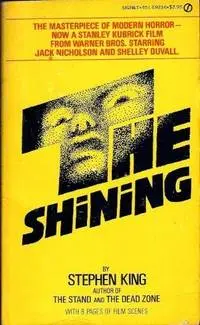
When I pulled Jaws from the Winter Reading display at Green Apple, right next to it was Stephen King’s The Shining (some winter recommendations indulge in the cold; some deny it). I had never read a Stephen King novel, so maybe it was time; seriously, how could I call myself a bookseller without having read him.
In the summer of 1980, I was working, temporarily, at Teton Books in Jackson Hole, Wyoming, and it was Stephen King all day long. Just past the register was a standing case with nothing but King face-outs. The Dead Zone was fresh in cloth that summer, as was the paperback of The Stand, and we stocked the rest: The Shining, Salem’s Lot, Carrie. I can’t imagine how many tourists raided that display. The RVs and campgrounds of America were spooky that summer.
But King’s popularity was not the only reason I stayed away. Frankly, I was too scared to read him; I’m a bit of a wimp. Though the movie version came out that summer, I chose not to see it. I continued to not read him for decades. Though over that time, I came to admire King, not only for his obvious skill as a writer—people loved his books; there must be something there—but for his stance in the publishing world. He has always been a staunch supporter of independent bookstores, and during the 80s, he only asked a $1.00 advance for his novels, understanding that big advances stressed publishers and made it harder for them to bring on new authors (he clearly also understood that he would sell gabillions of copies). Even today, he occasionally sells rights to his short stories, for $1.00, to film students, to give them a leg up. And I had read one of his books actually, the very generous and instructive On Writing.
I bought The Shining, confident it had been another of Nick’s choices, but it turned out another bright young bookseller, Andrew Zuniga, was behind this selection. I picked it up with trepidation. Since that summer in Jackson Hole, I had seen the movie (which King despises), and it terrified me, my scariest movie ever. Could I read this and still sleep?
The Shining is a keen psychological study of how humans create their own madnesses, and the ultimate cost of isolation. It’s not the hotel that’s haunted, but the characters. And, like Jaws, it’s better than the movie. The Shining reveals how the time and depth to which novels reach is often more satisfying than two hours in the dark. Better? Different. What really stands out in the novel is the denouement, where we follow mother and son and caretaker to a Maine-shore summer, the horror they’ve experienced still resonating but fading. For now.
And it’s a great read. As are all these books; along with their many accomplishments, they are great reads. Who doesn’t want that?
Lewis Buzbee is the author of “The Yellow-Lighted Bookshop” and many others, including 3 award-winning novels for younger readers. His new novel, “Diver,” published March, 2025.
As an affiliate of Bookshop.org, Malaprop’s, Books-A-Million, Audiobooks.com, Chirp, 2nd & Charles, Amazon, NameHero, Envato, and Place-It, LitStack may earn a commission—at no cost to you—when you purchase through our affiliate links. We appreciate the brands we work with, and also appreciate that using our affiliate links may help you find your next great read, a book or two or more, in whatever form, while simultaneously supporting LitStack. When you use our affiliate links, you help keep LitStack running—and for that, we thank you.
Other LitStack Resources
LitStack Spotlights
Be sure and check out LitStack Spotlights that shine a light on books we think you should read. We feature two books each week in our LitStack Spotlight, and offer suggestions for similar titles in our LitStack Spots.
Each week we offer a LitStack Rec, sometimes two books at once, sometimes more. Be sure and look at our LitStack Recs where you’ll find what you should read next.
You can find and buy the books we recommend at the LitStack Bookshop on our list of LitStack Recs.