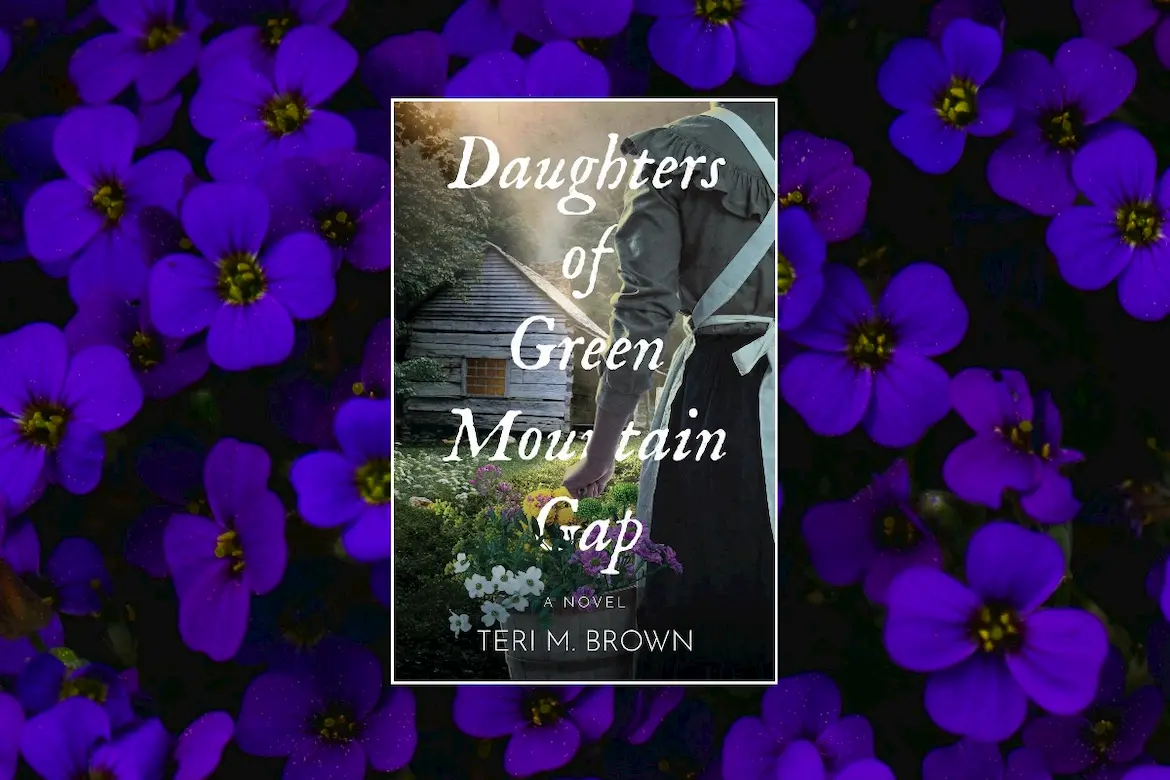
Daughters of Green Mountain Gap weaves a compelling tale of Maggie, Carrie Ann, and Josie Mae, three generations of remarkable North Carolina women, and the intricate dynamics within a family. The novel by Teri M. Brown is this week’s hearty LitStack Rec.
Make sure you catch the LitStack Author Interview at the end of this review!
As an affiliate of Bookshop.org, Malaprop’s, Books-A-Million, Audiobooks.com, Chirp, 2nd & Charles, Amazon, NameHero, Envato, and Place-It, LitStack may earn a commission—at no cost to you—when you purchase through our affiliate links. We appreciate the brands we work with, and also appreciate that using our affiliate links may help you find your next great read, a book or two or more, in whatever form, while simultaneously supporting LitStack. When you use our affiliate links, you help keep LitStack running—and for that, we thank you.
You can find and buy the books we recommend at the LitStack Bookshop on our list of LitStack Recs.

In This LitStack Rec of Daughters of Green Mountain Gap

Daughters of Green Mountain Gap
by Teri M. Brown
Knowledge, Wisdom, and Understanding
Maggie, Carrie Ann, Josie Mae—the past, present, and future collide in Teri Brown’s novel set in 1890s rural North Carolina. Maggie, who is a “granny woman”/healer has suffered great loss in her life due to illness, miscarriages, and misfortune. Watching her loved ones die, she and her husband, Henry, are rescued by Degataga, a member of the Cherokee tribe. Looking for solutions and keeping an open mind, Maggie chooses to balance her Christian beliefs with the traditional folk medicine and rituals of the indigenous tribe that has taken them in.
By the time Maggie’s daughter, Carrie Ann, has grown up, quite a bit has changed. Henry has passed away and the women no longer live alongside the Cherokee. Holding great disdain and contempt for her mother’s way of healing, Carrie Ann leaves for Boston, returning only once she is a trained nurse, savvy in all the latest medical knowledge. This leads to constant turmoil between mother and daughter as Carrie Ann cannot accept that the town relies on her mother’s scientifically unproven methods, even while Carrie Ann’s own bedside manner increasingly alienates patients.
A New Grasp
To complicate matters further, Carrie Ann has a daughter of her own. Josephine (or Josie Mae), is eager to learn at the hands of her grandmother which further incenses Carrie Ann. But several members of both Cherokee and white society recognize Josie Mae’s great potential for healing and for bridging the gap between old world and new world customs.
With scenes that sizzle on the page and drench the reader in concern for all the characters, Brown’s novel is a supreme work of historical fiction that will linger in the mind.
~ Allie Coker

A LitStack Author Interview With Teri M. Brown
LITSTACK: You capture familial friction so accurately in this novel about strong women who are vastly different from one another. What are some of their greatest similarities in your opinion? What do you think each of them wanted/needed most in this story?
BROWN: Each of my characters has a passion for healing, but each sees their role somewhat differently. This passion is what moves them forward but also sets them against one another at times. Just imagine believing completely in the healing properties of roots and herbs or the spiritual healing of the Cherokee while your daughter only sees modern cures as the answer. It is no wonder they experienced friction!
In terms of what they wanted, Maggie wanted to be a lifelong learner and use what she learned to help those she loved. Carrie Ann wanted something she could count on. She needed medicine to have a correct answer every single time. Josie Mae wanted to lean into her passion and be open to the possibilities of the past and the future.
LITSTACK: Have you always had an interest in indigenous peoples and their ways of treating ailments? What made you decide to highlight the Cherokee?
BROWN: Like Maggie, I consider myself a lifelong learner. I’ve always been fascinated by other cultures and how they worship God, heal their sick, consider family, and more. So, although I haven’t specifically sought out information about indigenous healing practices before, I certainly have now!
When I chose to place Maggie in the 1890s in the Appalachian Mountains of NC, I realized I had the opportunity to highlight the Cherokee who stayed in NC and were not forced to relocate during the Trail of Tears. With so many people moving to NC annually, a large portion of the population is unaware of the Cherokee reservation within North Carolina. I love adding historical facts to my books that make readers say, “I didn’t know that!”
LITSTACK: What do you find compelling about writing a multigenerational novel?
BROWN: There is always more than one side to a story and more than one way to look at events going on around us. Showing events from the perspective of different generations is a great way to get a look at the various viewpoints.
I realized this when I thought back to my childhood listening to my grandparents go on and on about the Depression. In 1970, I would have been seven years old, and I couldn’t understand why they were still talking about something that was no longer an issue. My grandparents lived it. My mom doesn’t remember it, but lived with the after effects. I didn’t care. Now, I am the grandma who talks about 9/11. My kids vaguely recall it but were very young. My grandkids likely don’t care. And all three viewpoints are valid and skew how one sees the world.
LITSTACK: How does this differ from your other books? Were there any surprises to you while writing this?
BROWN: Although my first three books are historical fiction, they are all very different. The first is set in the 1970s in Ukraine. The second is a WWII genre with a dual timeline. Daughters of Green Mountain Gap, my third, was set in the 1890s in NC. The biggest difference is that although each of my books has a nod to North Carolina, Daughters is set entirely in North Carolina except for Carrie Ann’s brief time in Boston for schooling.
The surprises while writing came from the research. I learned so many things about granny women – or at least what they can do. Additionally, I loved learning about the Cherokee traditions and herbal remedies in general.
LITSTACK: What does your process for research look like?
BROWN: I have three phases for my research. The first is what I call the encyclopedic overview. With this research, I’m just trying to get a feel for the time, place, and people. I take a lot of notes and paste them into a document.
The second phase happens while I write. Sometimes, I just need to know if something is accurate or could have happened in 1890. For instance, I have a scene where Carrie Ann tries factory jarred applesauce. I needed to know if that could have happened, especially for someone living in NC.
The final phase happens after the first draft is completed. This stage of research helps me add more details to help readers feel immersed in the book.
About Teri M. Brown

Teri M. Brown is an award-winning American author of historical and contemporary fiction known for crafting character-driven stories centered on resilience, family dynamics, and generational bonds.
Born in Athens, Greece, as a military child, Brown spent years traveling the globe before settling in coastal North Carolina. After a multi-decade career in business and freelance writing—alongside a cross-country tandem bicycling trek with her husband—she turned to full-length fiction with her acclaimed debut, Sunflowers Beneath the Snow.
Brown is celebrated for her immersive historical novels, particularly Daughters of Green Mountain Gap and its companion An Enemy Like Me. Set against the rugged, atmospheric backdrop of early 20th-century Appalachia, Daughters of Green Mountain Gap chronicles the courage, herbal healing traditions, and domestic struggles of multiple generations of mountain women. Brown’s evocative storytelling continues to resonate with readers drawn to rich historical detail and deeply empathetic female protagonists.
You can connect with Teri M. Brown on her website, Facebook, and LinkedIn.
Publisher: Atmosphere Press
ISBN Softcover: 9798891320567
Pub Date: Jan 23, 2024
Other Titles by Teri M. Brown
Here are a few other titles to buy to add to your TBR stack, including An Enemy Like Me by Teri M. Brown, Peg, Unhinged by Teri M. Brown, and Sunflowers Beneath the Snow by Teri M. Brown.
Other LitStack Resources
LitStack Spotlights
Be sure and check out LitStack Spotlights that shine a light on books we think you should read. We feature two books each week in our LitStack Spotlight, and offer suggestions for similar titles in our LitStack Spots.
LitStack Reviews
Also look at our LitStack Reviews, including reviews by Lewis Buzbee, Lauren Alwan, Allie Coker, Rylie Fong, and Sharon Browning.
LitStack Recs
Each week we offer a LitStack Rec, sometimes two books at once, sometimes more. Be sure and look at our LitStack Recs where you’ll find what you should read next.
You can find and buy the books we recommend at the LitStack Bookshop on our list of LitStack Recs.


As an affiliate of Bookshop.org, Malaprop’s, Books-A-Million, Audiobooks.com, Chirp, 2nd & Charles, Amazon, NameHero, Envato, and Place-It, LitStack may earn a commission—at no cost to you—when you purchase through our affiliate links. We appreciate the brands we work with, and also appreciate that using our affiliate links may help you find your next great read, a book or two or more, in whatever form, while simultaneously supporting LitStack. When you use our affiliate links, you help keep LitStack running—and for that, we thank you.
As a Bookshop, Malaprop’s, BAM, Barnes & Noble, Audiobooks.com, Amazon, and Envato affiliate, LitStack may earn a commission at no cost to you when you purchase products through our affiliate links.