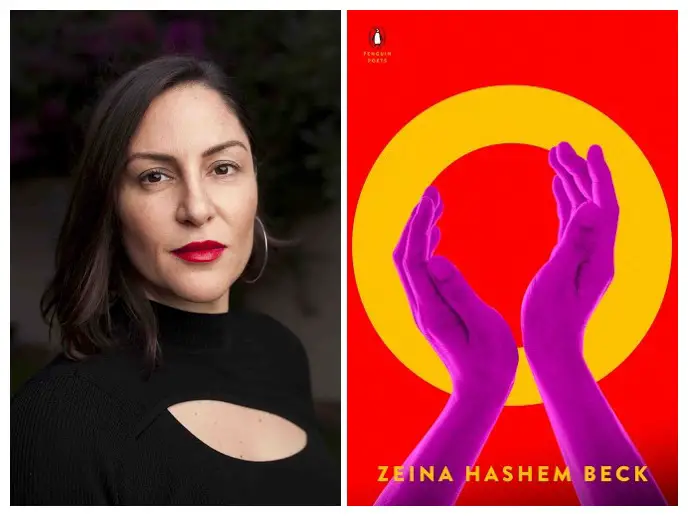
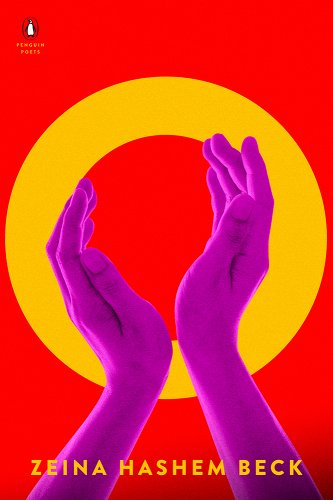
In this week’s LitStack Rec we set our sights on the luscious and beautiful book of poetry, O, by Zeina Hashem Beck.
As an affiliate of Bookshop.org, Malaprop’s, Books-A-Million, Audiobooks.com, Chirp, 2nd & Charles, Amazon, NameHero, Envato, and Place-It, LitStack may earn a commission—at no cost to you—when you purchase through our affiliate links. We appreciate the brands we work with, and also appreciate that using our affiliate links may help you find your next great read, a book or two or more, in whatever form, while simultaneously supporting LitStack. When you use our affiliate links, you help keep LitStack running—and for that, we thank you.
In This LitStack Rec of “O” by Zeina Hashem Beck
You can find and buy the books we recommend at the LitStack Bookshop on our list of LitStack Recs.

“O” by Zeina Hashem Beck
Poetry Existing Across Language, Place, and Identity
The work of Zeina Hashem Beck, a Lebanese poet currently living in the US, embodies both beautiful poetry and Arab American Heritage. Her poetry exists across language, place, and identity. In her collection, O, she writes of moments and experiences that vary in scale, with equal attention and depth given to the small, the ordinary, and the earth-shaking. Zeina’s sharp, rich, and heartbreaking language alters the way the reader sees the world, exposing the places in ordinary life where meaning lives.
“There is no set language for poetry,” writes Lebanese poet Ounsi el-Hajj in the collection’s introduction. In O, the author’s third collection, the poems move between English and Arabic. The effect, as the publisher says, is “formally electrifying–from lyrics and triptychs to ghazals and Zeina Hashem Beck’s own duets…English and Arabic echo and contradict each other….O explores the limits of language, notions of home and exile, and stirring visions of motherhood, memory, and faith.”
A Continually Unfolding Journey
The opening poem, “Ghazal: With Prayer,” recalls the civil war: “In the museum of memory/the missing accumulate,” Zeina writes, and roots us in personal and political history. For this American-born reader, this grounding sets the emotional stakes of the collection—and when the speaker tells us she’s “through with prayer,” we understand that the past, far from being in the past, remains a continually unfolding journey.
The collection has an elegiac mood, and throughout there are odes, to leaving, to hunger, and to fear—fear of laughter, beauty, the body. There’s also an ode to lipstick:
The lipstick you bought is called Plum.
It smells good. You’re learning to love bolder
colors on your lips: red, mauve, fuchsia. You want
to go out one day & buy green lipstick.
“Ode to Lipstick,” like many poems in this collection, circles back from the quotidian to mine deeper aches—here, of motherhood and children growing up, and how easily the quotidian, which holds time and memory, can slip away.
There are also poems of marriage, and partners aging together, as in “UNBREAKABLE” which charts the scare of a beloved’s illness. “I always thought I’d be the one/whose body failed first,” she writes. Here too, memory and the everyday lead to the deeper undercurrents of life and living:
when the doctor named the disease
& told you one can manage it these days—
there are pills, there is time.
I know we are not young young,
know the body is but a shell—
A Third Poem Opens in the Conversation
Many of the poems in this collection are written in stanzas and lines that alternate between English and Arabic. This approach began in what Zeina Hashem Beck has called “duets,” translations published alongside one another. In O, the exploration of this intersection of language continues. “All languages confuse me,” Zeina has written. Positioning her first language alongside a later one brings another facet of experience to the poem. I’m not a speaker of Arabic, but in the audiobook especially, the effect is especially moving. Read aloud, the lines in different languages sync and elaborate upon each other in beautiful ways—as Zeina has described: “a third poem should open up in the conversation between the two languages.”
~Lauren Alwan
About Zeina Hashem Beck

Zeina Hashem Beck is an award-winning Lebanese poet whose work explores home, language, and the body. She is the author of O (Penguin Books), which won the 2023 George Ellenbogen Poetry Award, as well as Louder than Hearts and To Live in Autumn.
Known for inventing “The Duet”—a bilingual poetic form intersecting English and Arabic—her poetry has won Poetry magazine’s Frederick Bock Prize. She currently lives and teaches in California.
Other LitStack Resources
LitStack Spotlights
Be sure and check out LitStack Spotlights that shine a light on books we think you should read. We feature two books each week in our LitStack Spotlight, and offer suggestions for similar titles in our LitStack Spots.
LitStack Reviews
Also look at our LitStack Reviews, including reviews by Lewis Buzbee, Lauren Alwan, Allie Coker, Rylie Fong, and Sharon Browning.
LitStack Recs
Each week we offer a LitStack Rec, sometimes two books at once, sometimes more. Be sure and look at our LitStack Recs where you’ll find what you should read next.
You can find and buy the books we recommend at the LitStack Bookshop on our list of LitStack Recs.
As an affiliate of Bookshop.org, Malaprop’s, Books-A-Million, Audiobooks.com, Chirp, 2nd & Charles, Amazon, NameHero, Envato, and Place-It, LitStack may earn a commission—at no cost to you—when you purchase through our affiliate links. We appreciate the brands we work with, and also appreciate that using our affiliate links may help you find your next great read, a book or two or more, in whatever form, while simultaneously supporting LitStack. When you use our affiliate links, you help keep LitStack running—and for that, we thank you.