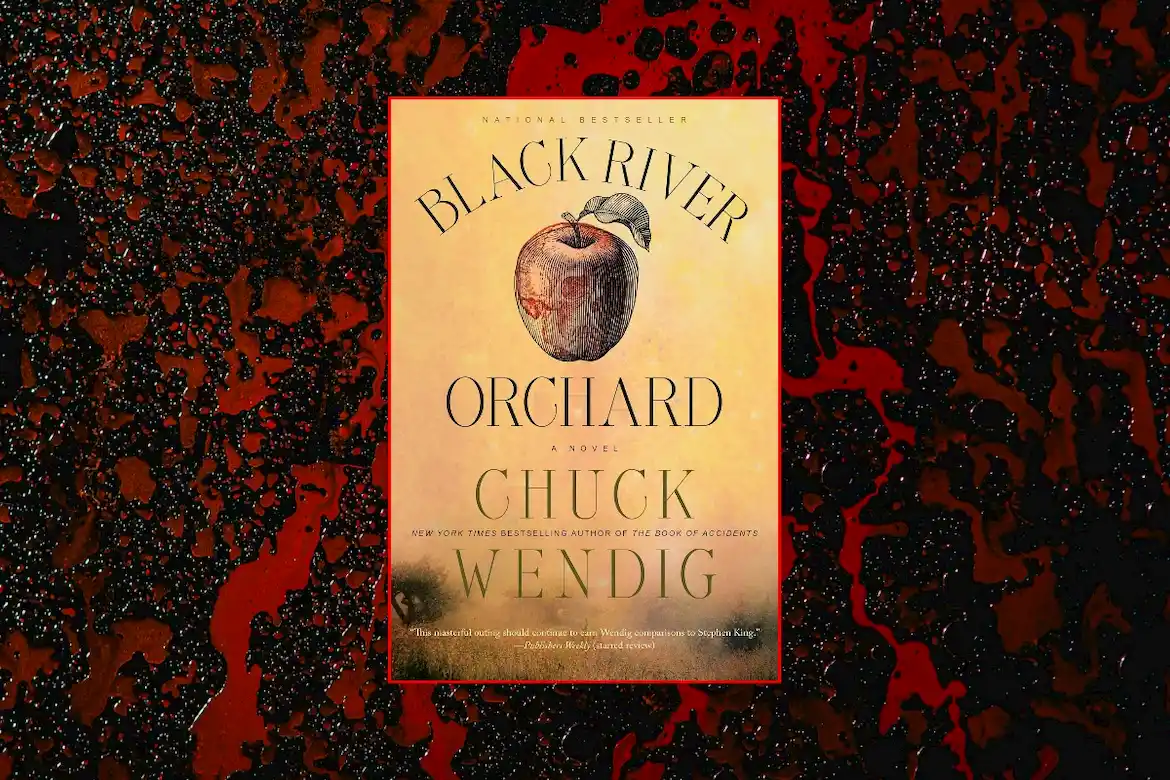
In Black River Orchard, a comforting seasonal ritual becomes a brilliant, body-horror exploration of grievance, radicalization, and community division. If you’re looking for Americana horror that bites back, this is the LitStack Rec of the season.
As an affiliate of Bookshop.org, Malaprop’s, Books-A-Million, Audiobooks.com, Chirp, 2nd & Charles, Amazon, NameHero, Envato, and Place-It, LitStack may earn a commission—at no cost to you—when you purchase through our affiliate links. We appreciate the brands we work with, and also appreciate that using our affiliate links may help you find your next great read, a book or two or more, in whatever form, while simultaneously supporting LitStack. When you use our affiliate links, you help keep LitStack running—and for that, we thank you.
In This LitStack Rec of Black River Orchard
You can find and buy the books we recommend at the LitStack Bookshop on our list of LitStack Recs.


Black River Orchard
by Chuck Wendig
What Am I Bid For My Apple?
Set in the quaint town of Harrow, Pennsylvania, Chuck Wendig’s Black River Orchard is an Americana horror novel that transforms the autumn harvest into a nightmare of mass addiction and physical mutation. The novel is not for the faint of heart. Though it delves into cultism, body mutation horror, and domestic violence, it does so without being overbearing. The violence and gore further the story, and are not gratuitous or forced. You’ll be very scared but you won’t be repelled (well, only a little); more so, the novel is a fast and furious read that keeps you devouring the pages like the cult of the apple devours its godlike fruit.
The story centers on Dan Paxson, an orchard owner on the brink of financial ruin, desperate to escape the shadow of his unsuccessful father and the town’s wealthy elite. His fortunes change when he cultivates seven strange, grafted trees that bear a new heritage fruit. He names the fruit the “Ruby Slipper,” an apple with skin so dark red it appears black.
The apples possess extraordinary, seemingly magical properties. One bite cures chronic ailments, restores vitality, and sharpens the mind, making the eater feel like an optimized version of themselves. The fruit quickly becomes a sensation at the local farmer’s market, but its true cost is sinister.
The apples act as a psychological parasite. As addiction takes hold, the fruit strips away the eaters’ empathy, leaving them cruel, defensive, and fiercely territorial. The apples amplify the townsfolks’ latent prejudices and personal grievances, splitting the community into fanatical apple-eaters and those who refuse to partake. Dan rapidly ascends from a desperate farmer to a ruthless cult leader, using his power over the addicted populace to control the town and eliminate dissent.
Members Of The Resistance
As Harrow descends into cultism and violence, a small group of uninfected residents band together and resist the cult of apples to survive. Wendig’s characters are well crafted, engaging and likeable, including one of the main characters, Calla Paxson, who is Dan’s teenage daughter. She avoids the apples and watches her father and boyfriend mutate into unrecognizable strangers.
The supporting characters are Emily Bergmann, a recent transplant to Harrow who must fight for survival after her wife falls under the fruit’s thrall; Joanie Moreau, a local business owner and Dan’s former girlfriend, who recognizes the dangerous psychological shift in the community; John Compass, a grizzled “apple hunter” tracking a missing colleague, who holds the key to the apple’s ancient, bloody, and supernatural history.
The characters, a band of resistance to the cult of the apple, discover that the trees’ roots are fed by a dormant, ancient rot tied to the land’s colonial past. As winter approaches, the infected townsfolk undergo grotesque, tree-like physical mutations, culminating in a desperate final showdown to destroy the orchard before the contagion can spread beyond the borders of Harrow.
Forget Everything You Think You Know About Apples
Who knew apples could be so scary? One of the strengths of this novel is that Wendig subverts everything noble you’ve been taught and know about apples. The Americana myth of the apple is destroyed, and the result is that the horror literally crawls under your skin and plays havoc with your head. It’s not only that the story is horrifying; as you read, you also face an unsettling sense that everything you’ve learned or think you know about America and apples is a lie; this paranoia compels you to read further though you’re afraid of what you’ll find and horrified when you find it.
Every autumn of my childhood, my family drove from Chicago to an orchard in Wisconsin for a day of apple picking. We were living near poverty, and for my parents, this day trip was an inexpensive way to give the family a sense of fun and togetherness. I vividly remember the excitement of climbing the ladders and the fierce competition among my siblings to see who could harvest the best and most apples. We would bring our haul home in baskets, but the magic always came with a deadline. We had to race to eat the apples before they began to spoil.
It is this exact slice of wholesome Americana that Wendig masterfully subverts. Wendig taps into the primal reality that the apple is our oldest symbol of temptation, transforming a comforting autumn ritual into a terrifying exploration of obsession, modern grievance, and creeping social rot.
The Horror Under The Skin
In classic cartoons and folklore, a friendly little worm poking its head out of a crisp apple is a cliché—a sign of a simple, organic oversight. Wendig strips away the cartoon innocence and restores the worm to its ancient, biblical definition of the serpent, the maggot, and the vector of decay. The worm in Black River Orchard is the hidden, writhing truth behind the apple’s glossy, dark red exterior. When uninfected characters look closely or spit the fruit out, the illusion drops, the apple flesh is alive with flies, maggots, and wriggling filth. It is the psychological horror of a beautiful lie.
A worm hollows things out from the inside while leaving the outer shell completely intact. This serves as a metaphor for the radicalization of Harrow’s townsfolk. To the outside world, Dan Paxson and his followers look stronger, healthier, and more vibrant than ever. But underneath that shiny, optimized exterior, the worm of the orchard’s apples has completely eaten away their conscience, empathy, and humanity. The townsfolk become hollowed-out husks controlled entirely by the orchard’s parasite.
Wendig uses horrifying images to make the act of reading tactile. By focusing on the texture of seeds scraping against enamel and the phantom sensation of something squirming in the mouth, he triggers an immediate, instinctual revulsion. He ensures that the reader doesn’t just observe the horror—they taste it.
I will never recover from this novel’s imagery of the apple seed. I won’t give the specific scenes away, but it is horrifying when apple seeds become a physical manifestation of a parasite taking root inside the jaw. As the cult members mutate, they grow extra rows of jagged, seed-like teeth, their old teeth replaced by the sharp, black seeds of the Harrowblack (the colonial name of the Ruby Slipper). The mouth is no longer an organ for tasting or kissing or communicating truth; it is converted into pure horror, a tool for tearing, spreading infection, and enforcing conformity.
We Dare You To Bite
I absolutely loved this horror novel. It scared me, it grossed me out, it made me think, and it spurred me on to read as fast as I could. The excitement and suspense were incredible and palpable. It perfectly captures and exposes the violent and ruthless underbelly of Americana. I would venture to say that this novel, along with Tananarive Due’s The Reformatory, will be known as one of this young century’s classic Americana horror novels. It’s that good.
I have eaten apples since reading this novel, but it is an entirely different experience now. My perspective has changed, deepened, and is somehow more appreciative yet wary of the mysterious fruit. The myth of Johnny Appleseed is overturned in my head. And given today’s charged landscape of cultural and political cultism, I understand more fully the nature of resistance, and the value of never ever being over certain.
A defining feature of the current Americana political climate is the hyper-polarization of communities, where neighbors, friends, and families are suddenly divided by fundamentally different perceptions of reality. In Black River Orchard, as the apple addiction spreads through Harrow, the town experiences a terrifying social contagion and mutation. The infected begin to think alike, speak alike, and enforce a rigid conformity, turning on their uninfected neighbors (and even their own children, as Dan turns on his daughter Calla).
Wendig captures the dread of watching a loved one descend into a cult-like mindset, where tribal loyalty overrides shared history, logic, and basic human decency. The bad apples in Harrow believe they are saving the town, illustrating in no uncertain terms the sobering reality that the most destructive political movements are driven by people convinced they are hero-like. By anchoring the book’s horror to America’s colonial past, Wendig also shows that political rot isn’t a new infection, it’s a dormant, uniquely American poison that waits in situ for the right ingredients to bring its deadly harvest.
One definite thing that has changed when I eat apples: I always remove the apple core now, afraid I might bite into one of its seeds. Don’t wait. Devour this novel now.
~J.S. Hood
About Chuck Wendig
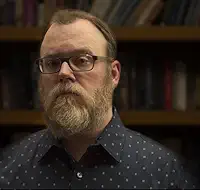
Chuck Wendig is an American author, screenwriter, and blogger known for his prolific output across horror, science fiction, and fantasy. Born in New Jersey in 1976, he attended Queens University of Charlotte, where he studied English. Wendig initially gained prominence in the writing community through his candid, foul-mouthed, and highly practical advice blog, Terribleminds, which spawned several popular books on the craft of writing.
His breakout success in fiction came with the Miriam Black urban fantasy series, starting with Blackbirds (2012). Wendig achieved mainstream commercial success when he was selected to pen the Star Wars: Aftermath trilogy (2015–2017), which bridged the narrative gap between Return of the Jedi and The Force Awakens, becoming a New York Times bestseller.
Wendig’s speculative fiction has earned significant critical acclaim. His sprawling apocalyptic epic Wanderers (2019) was a finalist for the Bram Stoker Award for Superior Achievement in a Novel and was followed by its sequel, Wayward (2022). His other notable horror novels include The Book of Accidents (2021) and Black River Orchard (2023). Today, Wendig lives in Pennsylvania with his family, continuing to write across multiple mediums.
LitStack Spots Titles by Chuck Wendig
We’re also adding these other titles by Chuck Wendig to our TBR stack, including Wanderers by Chuck Wendig, Wayward by Chuck Wendig, and The Book of Accidents by Chuck Wendig.
Other LitStack Resources
LitStack Spotlights
Be sure and check out LitStack Spotlights that shine a light on books we think you should read. We feature two books each week in our LitStack Spotlight, and offer suggestions for similar titles in our LitStack Spots.
LitStack Reviews
Also look at our LitStack Reviews, including reviews by Lewis Buzbee, Lauren Alwan, Allie Coker, Rylie Fong, and Sharon Browning.
LitStack Recs
Each week we offer a LitStack Rec, sometimes two books at once, sometimes more. Be sure and look at our LitStack Recs where you’ll find what you should read next.
You can find and buy the books we recommend at the LitStack Bookshop on our list of LitStack Recs.
As an affiliate of Bookshop.org, Malaprop’s, Books-A-Million, Audiobooks.com, Chirp, 2nd & Charles, Amazon, NameHero, Envato, and Place-It, LitStack may earn a commission—at no cost to you—when you purchase through our affiliate links. We appreciate the brands we work with, and also appreciate that using our affiliate links may help you find your next great read, a book or two or more, in whatever form, while simultaneously supporting LitStack. When you use our affiliate links, you help keep LitStack running—and for that, we thank you.