
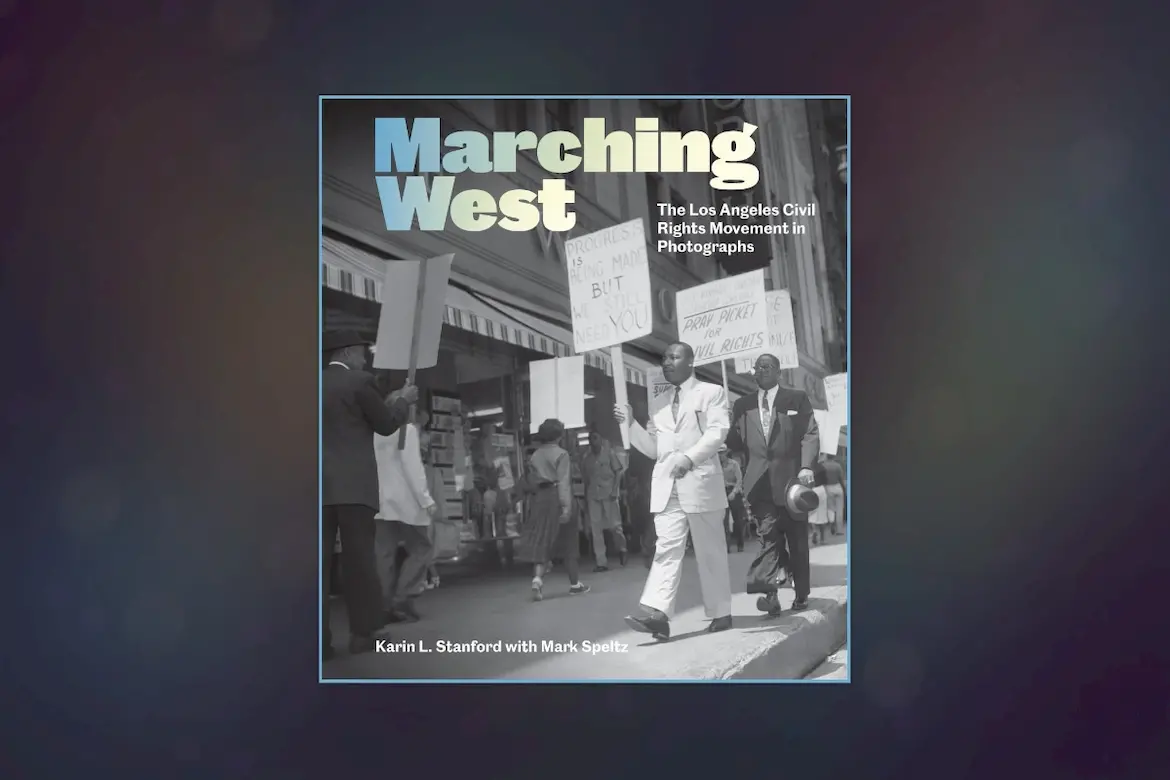
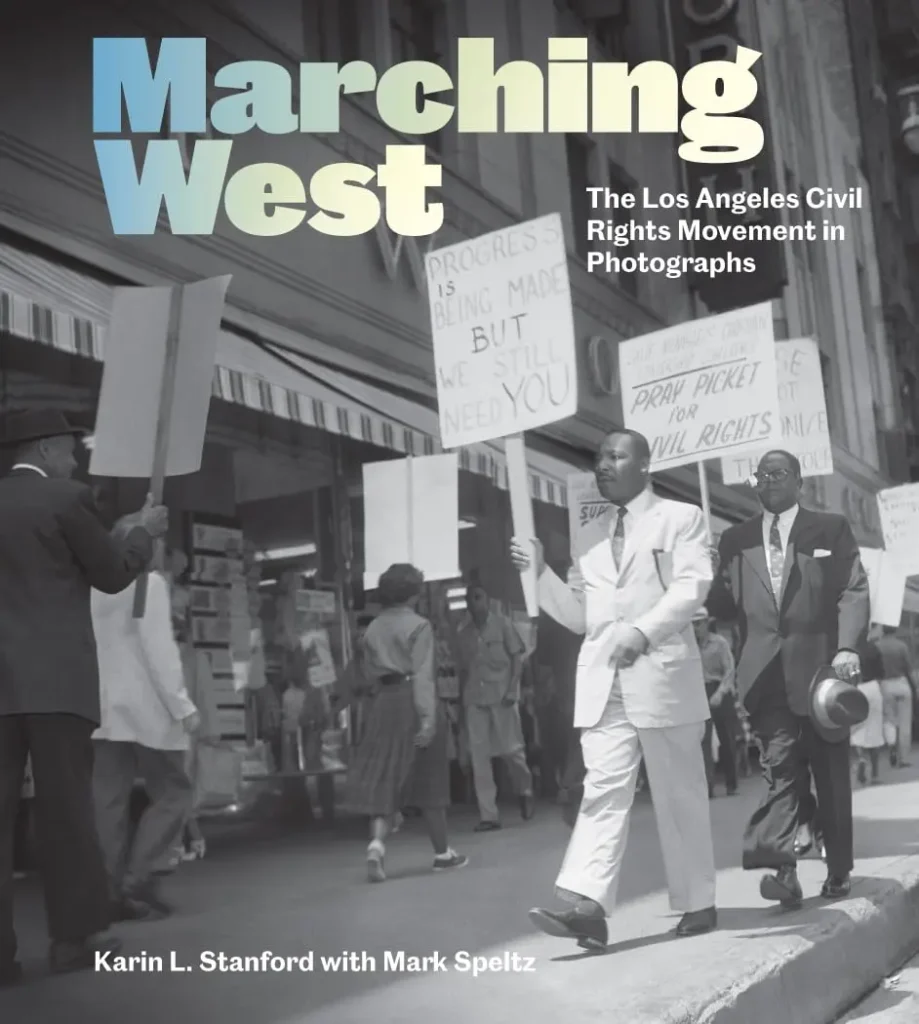
Marching West: The Los Angeles Civil Rights Movement in Photographs presents the first visual history of the people and organizations that led the fight for change during the civil rights era in Los Angeles.
As an affiliate of Bookshop.org, Malaprop’s, Books-A-Million, Audiobooks.com, Chirp, 2nd & Charles, Amazon, NameHero, Envato, and Place-It, LitStack may earn a commission—at no cost to you—when you purchase through our affiliate links. We appreciate the brands we work with, and also appreciate that using our affiliate links may help you find your next great read, a book or two or more, in whatever form, while simultaneously supporting LitStack. When you use our affiliate links, you help keep LitStack running—and for that, we thank you.
In This Spotlight On Marching West
Support Independent Bookstores.
You can find Spotlights at LitStack on bookshop.org


About Marching West
During a 1963 speech to a crowd of nearly forty thousand at Wrigley Field in Los Angeles, Dr. Martin Luther King Jr. addressed the question of how Angelenos could contribute to the civil rights movement: “The most important thing that you can do is to set Los Angeles free, because you have segregation and discrimination here, and police brutality.”
Marching West illuminates the dynamic history of civil rights activism in Los Angeles and explores how the medium of photography both witnessed and advanced the fight for Black equality. Over one hundred images, some of which have never been previously published, reveal connections between the local and national movements and document the actions of Western coalitions, religious leaders, Hollywood stars, and concerned citizens.
Drawn from the Tom & Ethel Bradley Center at California State University, Northridge (CSUN), the Getty Research Institute, and other Southern California collections—including prints by Harry Adams, Howard Bingham, Charles Brittin, Joe Flowers, Vera Jackson, and Charles Williams—this unprecedented volume of Marching West presents less familiar but essential stories about American progress toward social justice.

Praise for Marching West
“Marching West will change the way you see the civil rights movement and the City of Angels. This is not just a coffee table book but a stunning reexamination in text and photo of the longstanding Black freedom struggle in Los Angeles and the ways that reckoning with it change how we tell the story of the U.S. civil rights movement more broadly.”—Jeanne Theoharis, author of King of the North: Martin Luther King Jr.’s Life of Struggle Outside the South
[Marching West is] “Spectacular! If a picture is worth a thousand words, this book, larded with intriguing, enlightening and riveting images, is priceless—and tantamount to a billion words. It recounts an uplifting story of how bigotry was defeated—a timeless lesson still relevant today. It belongs in every library and every household, particularly in the Southland.”—Gerald Horne, author, Fire this Time: The Watts Uprising and the 1960s; Host KPFK-FM/Los Angeles
“Marching West: The Los Angeles Civil Rights Movement in Photographs gathers the visual language of resistance, where photographs become both witness and instrument, revealing a Los Angeles civil rights movement too often left outside the national frame. Through these images, we encounter a community shaping its own visibility, asserting dignity, and transforming the camera into a site of memory, power, and possibility. In these frames, history is not distant but lived….The book reminds us that photography does not simply document change; it participates in it, making visible the enduring presence of lives devoted to collective freedom.”—Deborah Willis, author of Reflections in Black: A Reframing and professor of Photography and Imaging, New York University
“Marching West repositions Los Angeles as central to the American civil rights narrative, tracing pivotal visits by Martin Luther King Jr. alongside the city’s own sustained struggles for justice. A must-read compilation of striking photographs and historical vignettes, it examines battles against restrictive covenants, police brutality, and segregation, offering a more complete account of Black freedom movements in a city too often overlooked in the broader story.”—Darnell Hunt, Executive Vice Chancellor and Provost, and Professor of Sociology and African American Studies at UCLA
About Karin L. Stanford and Mark Speltz, Creators of Marching West
Karin L. Stanford is a professor of political science in the Department of Africana Studies at California State University, Northridge (CSUN), and the special projects director of the Tom & Ethel Bradley Center at CSUN.
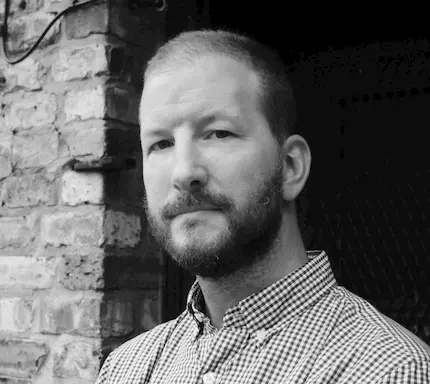
Mark Speltz is an author and public historian who researches and writes about civil rights–era photography, vernacular architecture, and Wisconsin culture and history. His articles and reviews have appeared in The Public Historian and The Journal of American History, and his book North of Dixie: Civil Rights Photography Beyond the South was published by Getty Publications in 2016.
Source: Publisher
Publisher: Getty Publications
ISBN Hardcover 9781606069899
Pub Date: June 16, 2026
Other LitStack Spots
We’ve spotted a few other titles that we are definitely adding to our TRB stack, including Stories of Struggle by Claudia Smith Brinson, Across That Bridge by John Lewis, and Black AF History by Michael Harriot.
Other LitStack Resources
LitStack Spotlights
Be sure and check out LitStack Spotlights that shine a light on books we think you should read. We feature two books each week in our LitStack Spotlight, and offer suggestions for similar titles in our LitStack Spots.
LitStack Reviews
Also look at our LitStack Reviews, including reviews by Lewis Buzbee, Lauren Alwan, Allie Coker, Rylie Fong, and Sharon Browning.
LitStack Recs
Each week we offer a LitStack Rec, sometimes two books at once, sometimes more. Be sure and look at our LitStack Recs where you’ll find what you should read next.
You can find and buy the books we recommend at the LitStack Bookshop on our list of LitStack Recs.



As an affiliate of Bookshop.org, Malaprop’s, Books-A-Million, Audiobooks.com, Chirp, 2nd & Charles, Amazon, NameHero, Envato, and Place-It, LitStack may earn a commission—at no cost to you—when you purchase through our affiliate links. We appreciate the brands we work with, and also appreciate that using our affiliate links may help you find your next great read, a book or two or more, in whatever form, while simultaneously supporting LitStack. When you use our affiliate links, you help keep LitStack running—and for that, we thank you.
As a Bookshop, Malaprop’s, BAM, Barnes & Noble, Audiobooks.com, Amazon, and Envato affiliate, LitStack may earn a commission at no cost to you when you purchase products through our affiliate links.